 Translate
Featured Assets
 BTC
BTC ETH
ETH XRP
XRP XDC
XDC XLM
XLM DOT
DOT ICP
ICP FET
FET VET
VET AAVE
AAVE TAO
TAO UNI
UNI ADA
ADA CGPT
CGPT VTHO
VTHO FIL
FIL NEAR
NEAR SHIB
SHIB SAND
SAND ILV
ILV AXS
AXS SLP
SLP KSM
KSM GFI
GFI GALA
GALA QNT
QNT USDCBTCETHXRPXDCXLMDOTICPFETVETAAVETAOUNIADACGPTVTHOFILNEARSHIBSANDILVAXSSLPKSMGFIGALAQNTUSDC
What is a Blockchain
FREEWhat is a Blockchain?
A blockchain is a distributed digital ledger that records transactions across many computers in a way that ensures the records cannot be altered retroactively. Think of it as a shared spreadsheet that thousands of computers maintain simultaneously — no single person or company controls it.
Each "block" contains a batch of transactions. Once full, it gets added to the "chain" of previous blocks — hence the name blockchain.
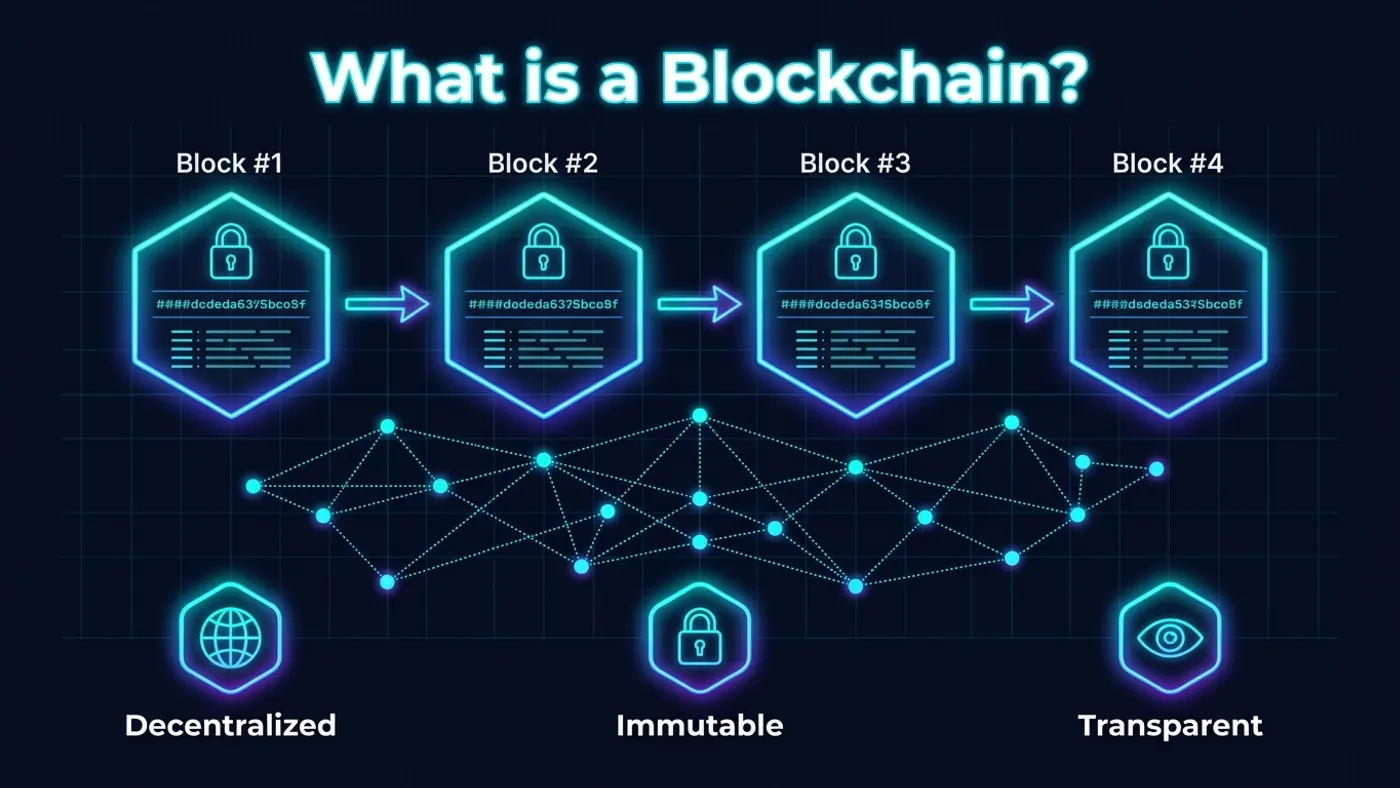

🧱 How a Block is Formed
Every transaction on a blockchain goes through a simple journey before it becomes part of the permanent record. Here's how it works in plain English:
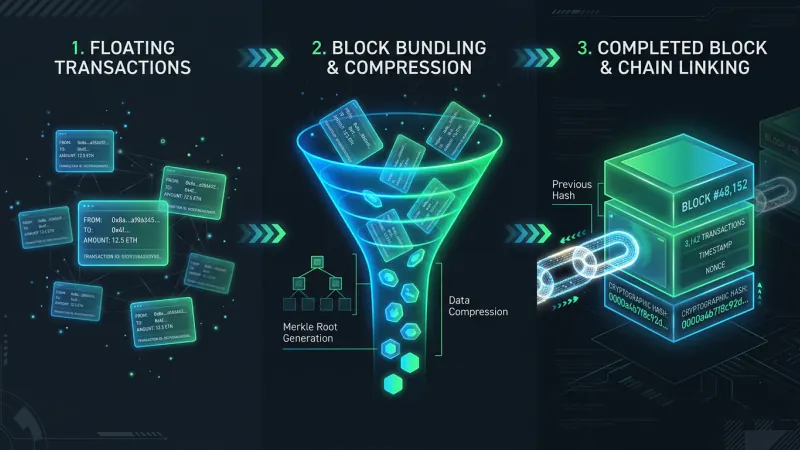
From sending crypto to permanent block confirmation — the full journey explained simply.
🔷 Types of Blockchains
There are four main types of blockchains, each designed for different levels of openness, control, and participation.
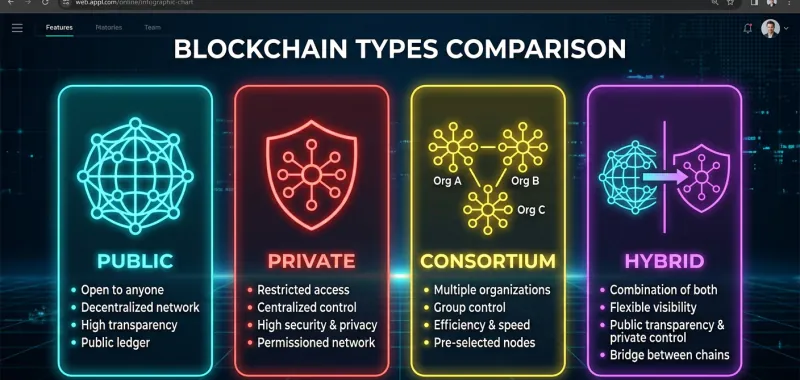
Four main types of blockchains — each with different levels of openness and control.
1. Public Blockchain
OPEN TO ALL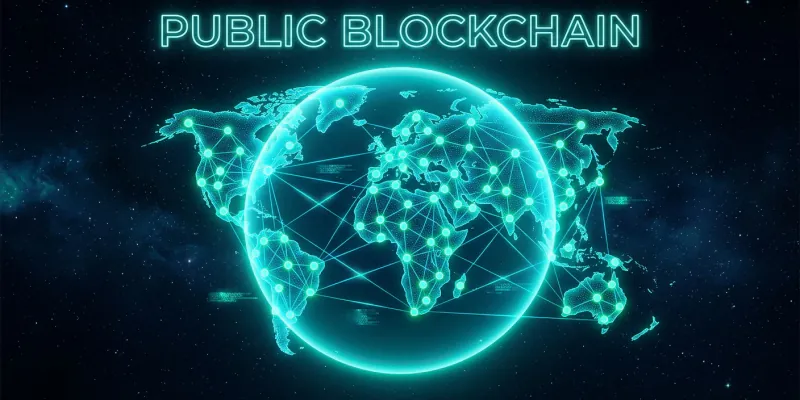
Open to everyone. Anyone can read, write, and participate — no permission needed. Fully decentralized with thousands of independent nodes worldwide.
Examples: Bitcoin, Ethereum, Solana, ICP
2. Private Blockchain
INVITE ONLY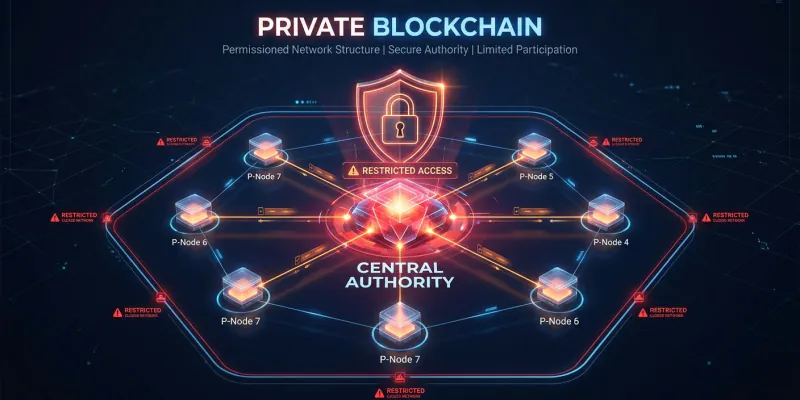
Controlled by a single organization. Only invited members can participate. Used by enterprises for internal record-keeping where full transparency is not desired.
Examples: Hyperledger Fabric, Corda
3. Consortium Blockchain
GROUP GOVERNED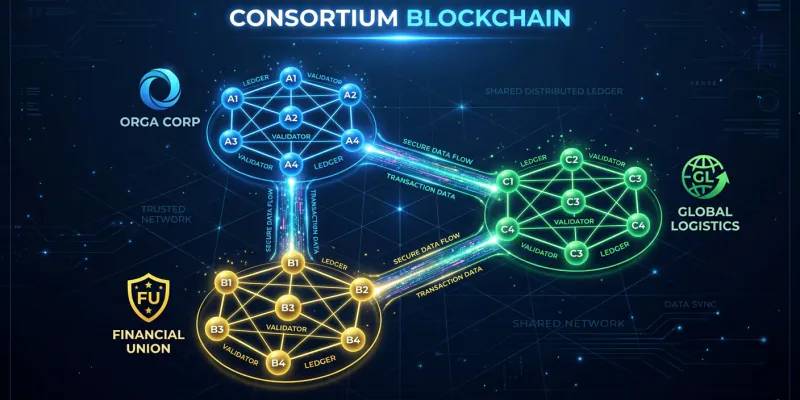
Controlled by a group of organizations rather than a single entity. Semi-decentralized governance where multiple companies share administrative control.
Examples: Quorum (J.P. Morgan), R3
4. Hybrid Blockchain
BEST OF BOTH
Combines features of both public and private blockchains. Some data is public (transparent), while other data is restricted (private) — giving flexibility and control.
Examples: Dragonchain, XinFin (XDC)
🔒 Why is Blockchain Tamper-Proof?
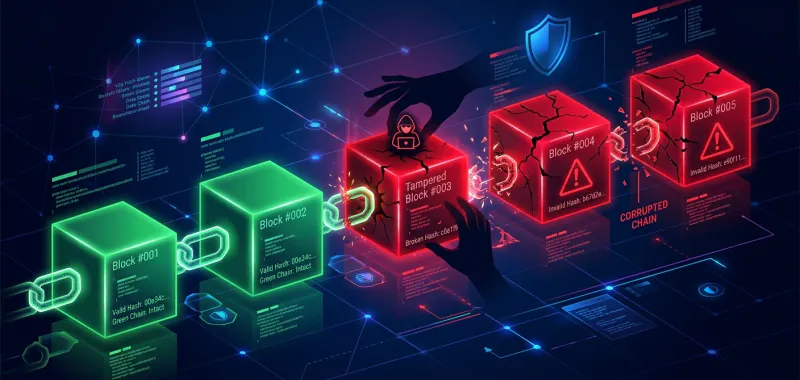
Changing even one block breaks all subsequent hashes — making tampering mathematically impossible.
Each block contains a cryptographic hash — a unique fingerprint of its data. Crucially, each block also contains the previous block's hash. If you change even a single character in any block, all subsequent hashes break, making tampering mathematically impossible.
🌍 Real-World Use Cases
Finance & DeFi
Borderless payments, lending, borrowing, trading — all without banks.
Supply Chain
Track goods from factory to store with tamper-proof records.
Healthcare
Secure, portable medical records that patients control.
Digital Identity
Self-sovereign identity — prove who you are without giving all your data away.
Gaming & NFTs
True ownership of in-game assets that can be traded globally.
Voting
Transparent, auditable voting systems that resist tampering.
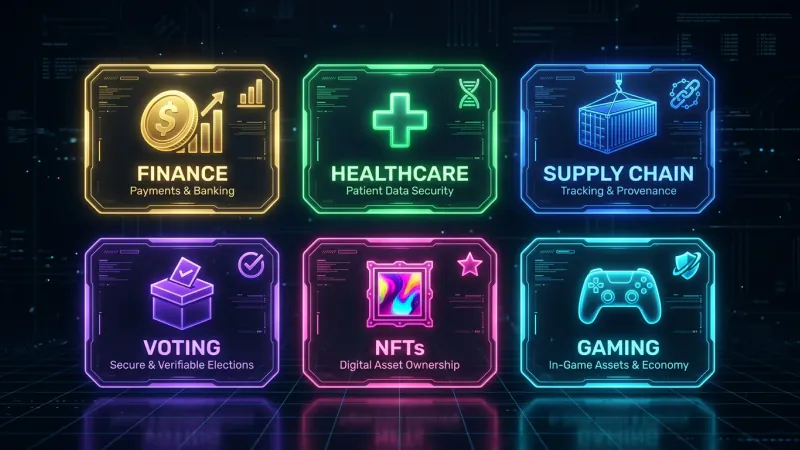
Blockchain is transforming industries from finance and healthcare to supply chain and voting
Consensus Mechanisms
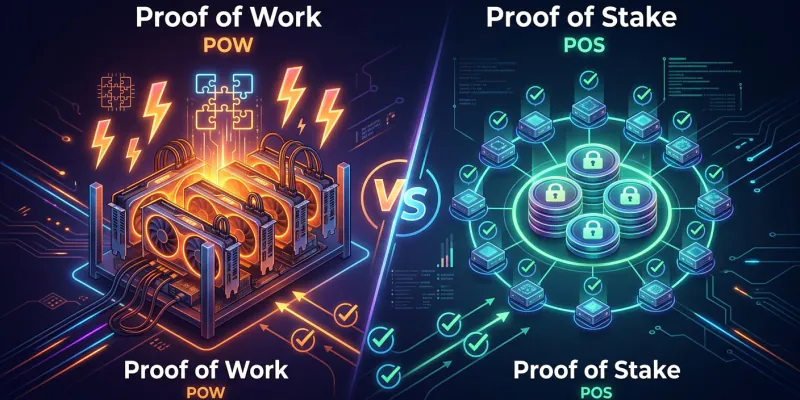
PoW requires computation power; PoS requires staked collateral; DPoS uses community voting.
Proof of Work (PoW)
Miners compete to solve complex mathematical puzzles. Used by Bitcoin. Energy-intensive but highly secure.
Proof of Stake (PoS)
Validators are chosen based on how much cryptocurrency they stake as collateral. More energy-efficient. Used by Ethereum, Cardano.
Delegated Proof of Stake (DPoS)
Token holders vote for delegates who validate transactions. Faster and more scalable.
🏗️ Blockchain Layers Explained
Blockchains are not built from a single piece — they are organised into layers, each with a specific job. Think of it like a building: the foundation, the structure, the floors, and the apartments on top. Here is what each layer does, explained simply.
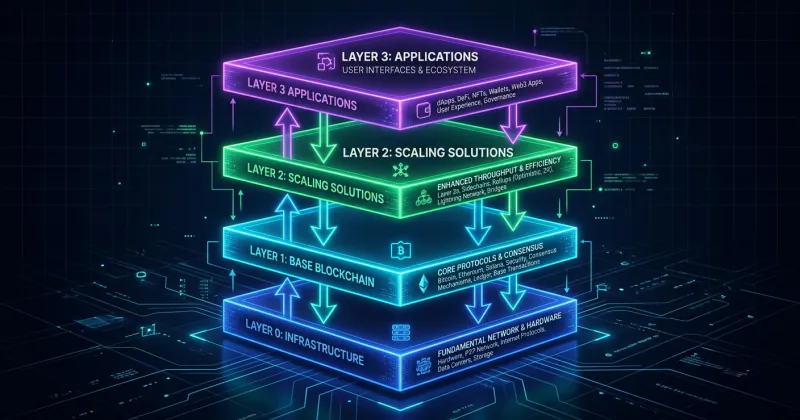
The four layers of blockchain technology — from infrastructure at the bottom to apps at the top.
The Foundation — Infrastructure
Layer 0 is everything that a blockchain needs to exist at all — the physical internet, servers, cables, and the protocols that let computers talk to each other around the world. It also includes cross-chain communication, which lets different blockchains share information with each other. Without Layer 0, there is no blockchain — it is the invisible ground everything is built on.
🔌 Examples: Internet protocols (TCP/IP), hardware nodes, Polkadot relay chain, Cosmos IBC

Layer 0: The physical and protocol infrastructure that all blockchains rely on.
The Base Blockchain
Layer 1 is the main blockchain itself — the core system where transactions are permanently recorded and consensus happens. When miners or validators agree that a transaction is valid, it gets written into a block and added to the chain forever. Bitcoin and Ethereum are the most well-known Layer 1 blockchains. Layer 1 is highly secure but can be slow and expensive when many people use it at the same time.
🔗 Examples: Bitcoin (BTC), Ethereum (ETH), Solana (SOL), Cardano (ADA), Internet Computer (ICP)
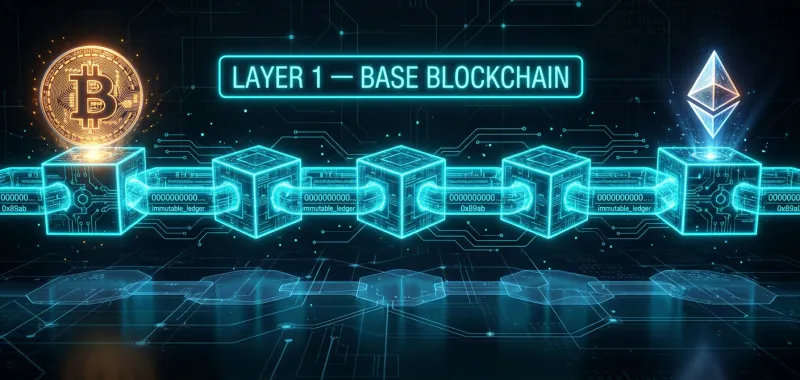
Layer 1: The base blockchain where all transactions are recorded and secured.
Speed & Scaling — Built on Top
Layer 2 solutions are built on top of Layer 1 to handle transactions faster and at a lower cost. Instead of recording every single transaction directly on the main blockchain, Layer 2 bundles many transactions together and only settles the final result on Layer 1. This keeps the base chain secure while making everyday payments and interactions much cheaper and quicker.
⚡ Examples: Lightning Network (for Bitcoin), Polygon (for Ethereum), Optimism, Arbitrum
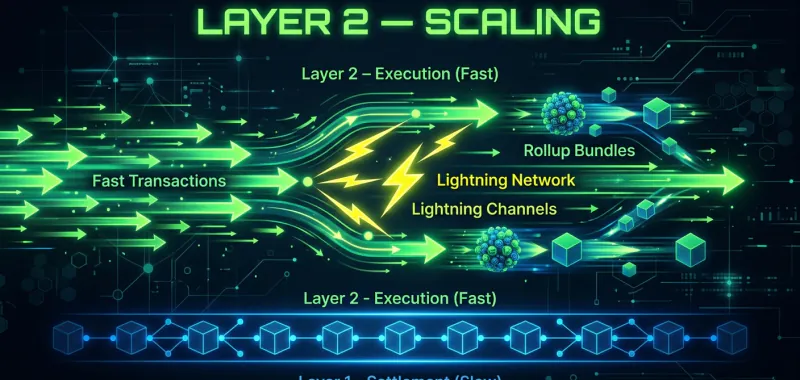
Layer 2: Faster and cheaper transactions built on top of the secure Layer 1 base.
The Application Layer — Where You Actually Live
Layer 3 is the part you actually see and use. It is where real-world apps, games, DeFi platforms, NFT marketplaces, and every user-facing product is built. When you open a crypto wallet app, trade on a decentralised exchange, or mint an NFT, you are interacting with Layer 3. These applications use the security of Layer 1 and the speed of Layer 2, combining them to deliver smooth experiences to everyday users.
🚀 Examples: Uniswap (DeFi), OpenSea (NFTs), Axie Infinity (Gaming), MetaMask (Wallet), Caffeine AI (Web3 Apps)
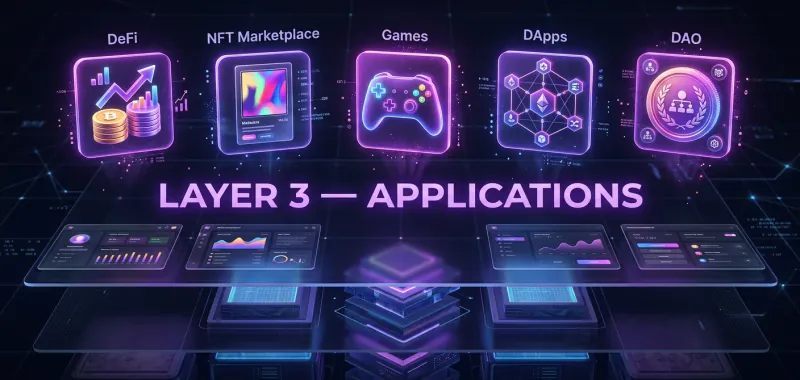
Layer 3: The apps and platforms ordinary people use every day — built on all the layers below.
| Layer | Name | Job | Examples |
|---|---|---|---|
| L0 | Infrastructure | Physical internet, hardware, cross-chain links | Polkadot, Cosmos |
| L1 | Base Blockchain | Record transactions, run consensus, store data | Bitcoin, Ethereum, ICP |
| L2 | Scaling | Speed up transactions, reduce fees | Lightning, Polygon, Arbitrum |
| L3 | Applications | Apps, DeFi, games, wallets users interact with | Uniswap, OpenSea, MetaMask |
Key Takeaways

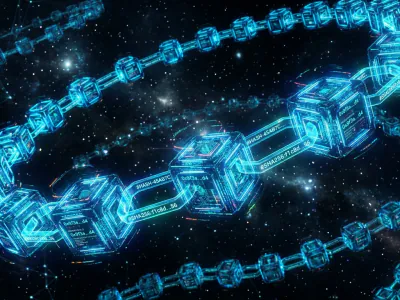
A shared, tamper-proof ledger
A blockchain records transactions across thousands of computers. Each block links to the previous one via a cryptographic hash — change one block and every later hash breaks.
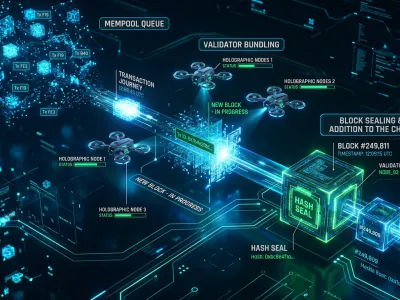
How a block is formed
A transaction waits in the mempool, a validator bundles it, the block is sealed with a timestamp and hash, then permanently added to the chain — usually every few minutes.

Four types of blockchains
Public (open to all, e.g. Bitcoin), Private (invite only), Consortium (group governed), and Hybrid (best of both) — each tuned for different openness and control.

Consensus keeps everyone honest
Proof of Work (mining, Bitcoin), Proof of Stake (staking, Ethereum), and Delegated PoS (voting) are how decentralized networks agree on the truth without a central authority.
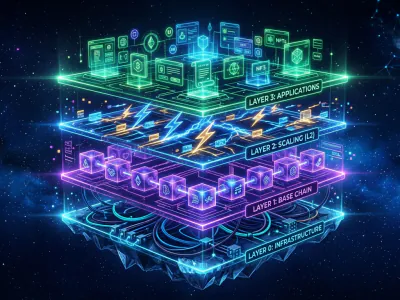
Built in layers
Layer 0 is infrastructure, Layer 1 is the base blockchain, Layer 2 scales it for speed and cost, and Layer 3 is the apps you actually use — DeFi, wallets, NFTs, games.

Cryptographic hashing seals each block
Every block stores the SHA-256 hash of the previous block. Altering old data changes its hash, breaking every link that follows — making tampering immediately visible.

Decentralization resists censorship
With no single owner or server to shut down, a public blockchain keeps running as long as nodes exist — making it resilient to outages, censorship, and coercion.

Finality varies by chain
Some chains reach finality in seconds (Tendermint), others probabilistically (Bitcoin needs ~6 confirmations). Finality defines when a transaction is considered irreversible.
© 2026 Crypto Quick Guide. All rights reserved.
Disclaimer
Crypto Quick Guide (“the App”) is provided for educational and informational purposes only. The content available through the App does not constitute financial, investment, legal, tax, or other professional advice.
Cryptocurrencies and digital assets involve significant risks, including the possible loss of capital. Users should conduct their own research and consult qualified professionals before making any financial or investment decisions.
While we strive to provide accurate and up-to-date information, we make no guarantees regarding the accuracy, completeness, reliability, or timeliness of the content provided through the App.
Your use of the App and reliance on any information contained within it is solely at your own risk. To the maximum extent permitted by applicable law, Crypto Quick Guide, its owners, developers, and affiliates shall not be liable for any direct, indirect, incidental, consequential, or other losses or damages arising from the use of, or reliance upon, the App or its content.
The App is provided on an “as is” and “as available” basis without warranties of any kind, whether express or implied.
By using the App, you acknowledge and agree to this Disclaimer. If you do not agree to these terms, please discontinue use of the App.
Terms of Service
By accessing or using Crypto Quick Guide, you agree to these Terms of Service.
- The App is provided for educational and informational purposes only.
- The content within the App may be updated, modified, or removed at any time without prior notice.
- Users are responsible for their own decisions and actions based on information obtained from the App.
- All content, design, and materials within the App are the property of Crypto Quick Guide unless otherwise stated and may not be copied, reproduced, or distributed without permission.
- The App is provided on an “as is” and “as available” basis without warranties of any kind.
- To the maximum extent permitted by law, Crypto Quick Guide disclaims liability for any losses or damages arising from the use of the App.
